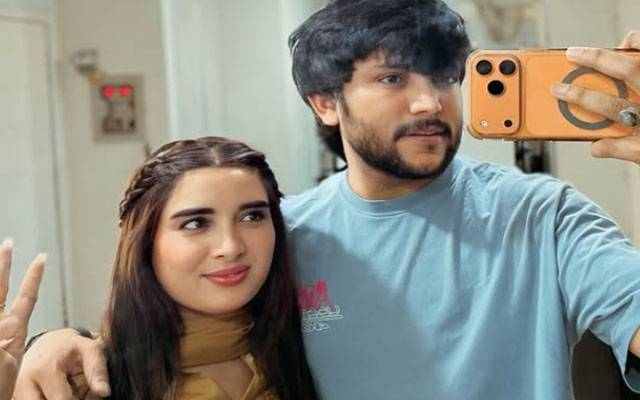
Pakistani social media influencer Ali Hyderabadi has become the center of a heated online discussion after a video allegedly showing him divorcing his wife during a public argument went viral across multiple platforms. The clip has triggered widespread debate, with users questioning its authenticity and raising concerns about the boundaries between personal life and online content.
The video spread rapidly on TikTok, Instagram, and YouTube, drawing significant attention and dividing viewers. In the footage, Ali Hyderabadi appears to be engaged in a heated exchange with his wife, who can be heard repeatedly asking him to stop recording. During the argument, he is allegedly heard pronouncing divorce in the presence of family members, including her brothers.
The nature of the incident has led to strong reactions across social media. Many users criticized the situation, expressing concern that deeply personal and sensitive family matters should not be recorded or shared publicly. Others, however, questioned whether the incident was genuine, suggesting it may have been staged or exaggerated for online engagement and views.
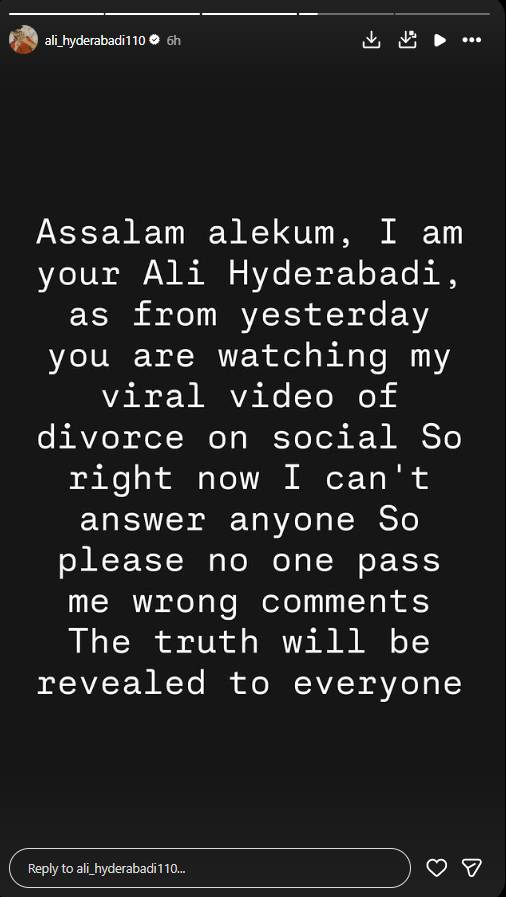
As speculation continued to grow, Ali Hyderabadi addressed the controversy through his Instagram Story. In his message, he asked followers not to rush to judgment and to avoid posting negative comments until more clarity emerges about the situation.
He wrote, “Assalam-o-Alaikum, I am your Ali Hyderabadi. Since yesterday, you have been watching my viral divorce video on social media. Right now, I can’t answer anyone, so please don’t leave negative comments. The truth will be revealed to everyone.”
The statement did little to calm the ongoing debate, as social media users continued to analyze the clip and share differing interpretations of what may have occurred. Some users interpreted his message as an attempt to manage public reaction, while others viewed it as a call for patience until all facts are known.
The incident has once again highlighted the growing impact of social media virality on personal lives, especially for influencers whose private matters can quickly become public discourse. It has also raised broader questions about content creation ethics, privacy boundaries, and the consequences of turning real-life conflicts into online content.
As discussions continue, no official clarification or detailed explanation has been provided regarding the circumstances behind the video. For now, the situation remains unresolved, with public opinion split between skepticism and concern.
The controversy underscores how quickly online narratives can spread and evolve, often outpacing verified information and leaving audiences to interpret events based on limited context.